Product Overview
NoseDisplay ND020TFN320240-A01 is a 2.0 inch transflective IPS TFT LCD module with a 320×240 pixel display for product interface development. Its SPI interface and ILI9342C controller support integration into host display designs for handheld instruments, embedded controls and compact equipment interfaces. The panel can present operating status, menus and visual prompts within a model-specific hardware design. Review the specification, mechanical drawing and pin definitions when planning host connections, backlight control and enclosure integration. NoseDisplay can help evaluate display requirements, samples and project-specific customization before selecting the final configuration.
Technical Specifications
| Parameter | Specification |
|---|---|
| Model | ND020TFN320240-A01 |
| Display Size | 2.0 inch |
| Resolution | 320×240 pixels |
| Display Type | IPS TFT LCD |
| Display Mode | Transflective |
| Touchscreen | -- |
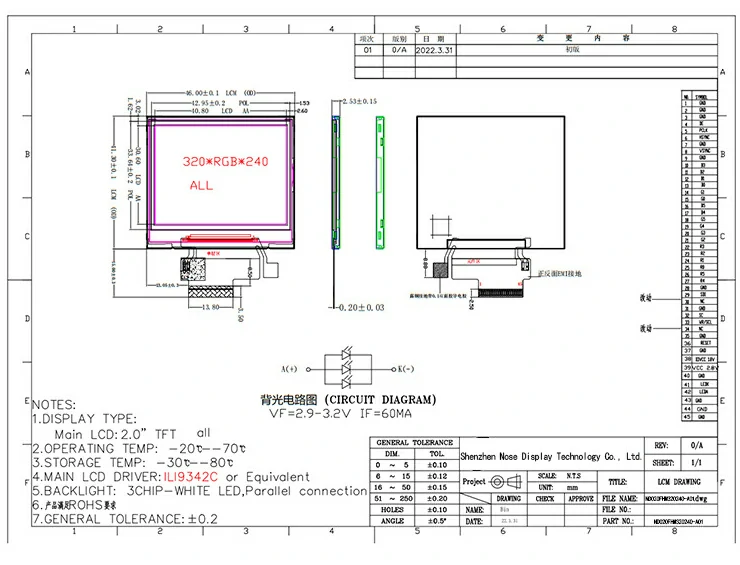
| Outline Dimensions | 46.10 × 40.96 × 2.53 mm |
| Active Area | 41.80 × 31.60 mm |
| Parameter | Specification |
| Supply Voltage | 2.8V-3.3V |
| Luminance | 220 cd/m² |
| Display Interface | SPI |
| Connection Type | 45 pin connector |
| IC | ILI9342C |
| Weight | -- |
| Operating Temperature | -20°C ~ +70°C |
| Storage Temperature | -30°C ~ +80°C |
Mechanical Drawing & Interface Definition
Please refer to the model-specific TFT-LCD specification for mechanical drawings, dimensions, FPC connection details and pin definitions. Visit our Download Center for available datasheets, or contact an engineer to request documentation for your model.

PIN Description
| Pin No. | Symbol | Description |
|---|---|---|
| 01 | GND | Ground |
| 02 | GND | Ground |
| 03 | GND | Ground |
| 04 | DE | Data Enable |
| 05 | PCLK | Pixel Clock |
| 06 | HSYNC | Horizontal Sync |
| 07 | GND | Ground |
| 08 | CSYNC | -- |
| 09 | GND | Ground |
| 10 | B3 | Data Bus |
| 11 | B2 | Data Bus |
| 12 | B1 | Data Bus |
| 13 | B0 | Data Bus |
| 14 | G1 | Data Bus |
| 15 | G0 | Data Bus |
| 16 | -- | -- |
| 17 | -- | -- |
| 18 | G5 | Data Bus |
| 19 | G4 | Data Bus |
| 20 | G3 | Data Bus |
| 21 | G2 | Data Bus |
| 22 | -- | -- |
| 23 | -- | -- |
| 24 | -- | -- |
| 25 | -- | -- |
| 26 | -- | -- |
| 27 | -- | -- |
| 28 | GND | Ground |
| 29 | SDI | Serial Data Input |
| 30 | NC | No Connection |
| 31 | GND | Ground |
| 32 | SC | Chip Select |
| 33 | WR/SCL | Write / Serial Clock |
| 34 | NC | No Connection |
| 35 | GND | Ground |
| 36 | RESET | Reset |
| 37 | GND | Ground |
| 38 | IOVCC | I/O POWER SUPPLY |
| 39 | VCC | POWER SUPPLY |
| 40 | GND | Ground |
| 41 | LEDK | Backlight Cathode |
| 42 | LEDA | Backlight Anode |
| 43 | GND | Ground |
| 44 | GND | Ground |
| 45 | GND | Ground |
Typical Applications

Industrial Control

Smart Home Panels

Portable Instruments

Embedded IoT Devices
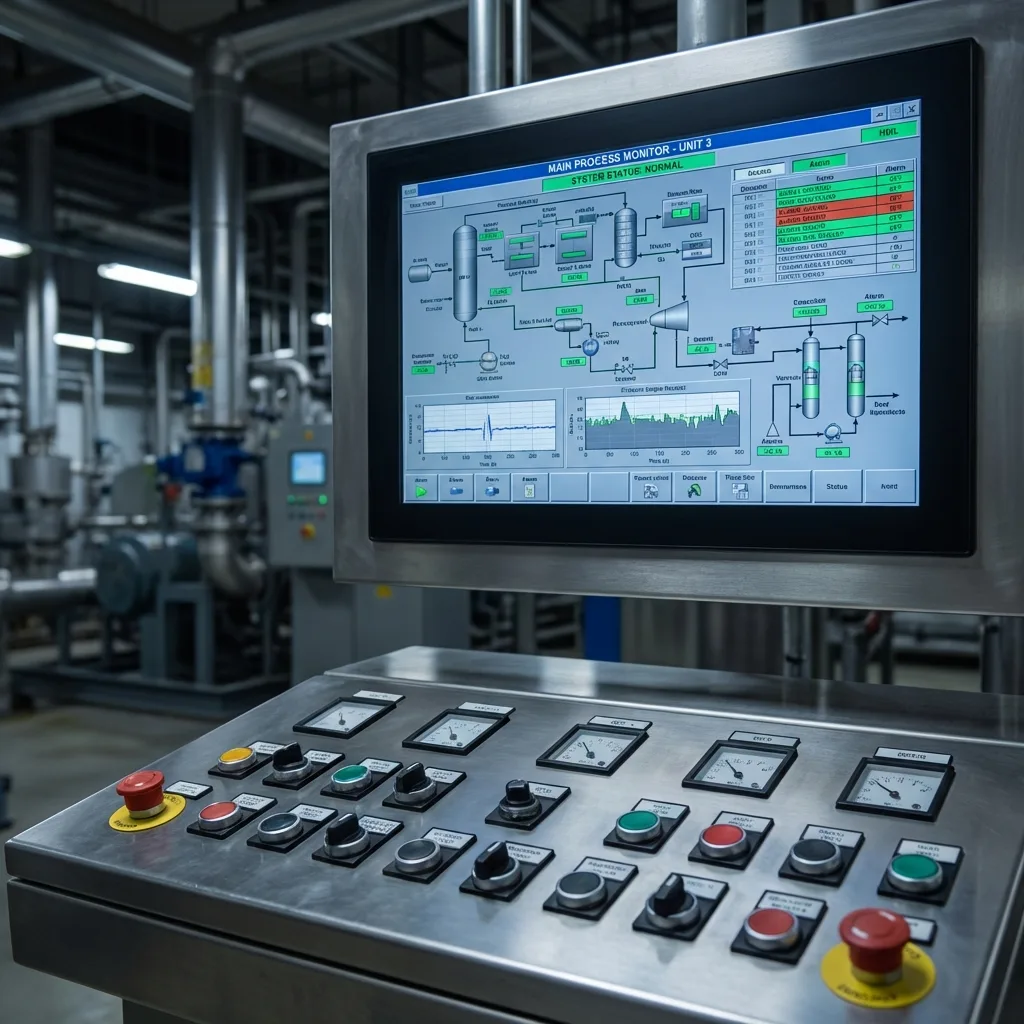
TFT LCD displays are widely used in industrial control panels, handheld instruments, smart home devices, embedded systems, IoT equipment, medical devices and other human-machine interface applications requiring clear, responsive visual output.
Customization Options
NoseDisplay supports project evaluation for panel selection, FPC integration, cover lenses, touch options and driver boards. Final feasibility and specifications depend on the selected display configuration and application requirements.
FPC & Connector Integration

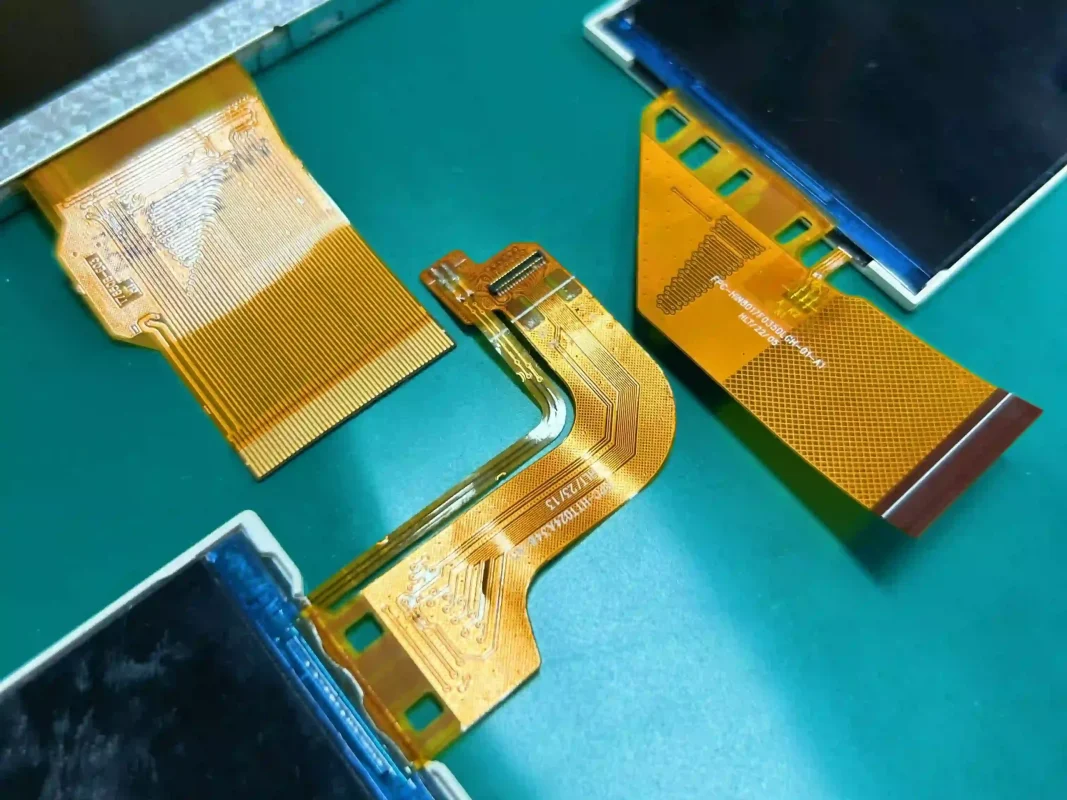
Review FPC length, routing, pin layout and connector position against your selected panel, host board and enclosure. Final cable and connector specifications are confirmed during project review.
Panel & Interface Selection

Evaluate alternative TFT panels when your project needs a different resolution, brightness, viewing direction or interface. Supported interfaces depend on the selected panel and display IC.
PCB & Driver Board Design

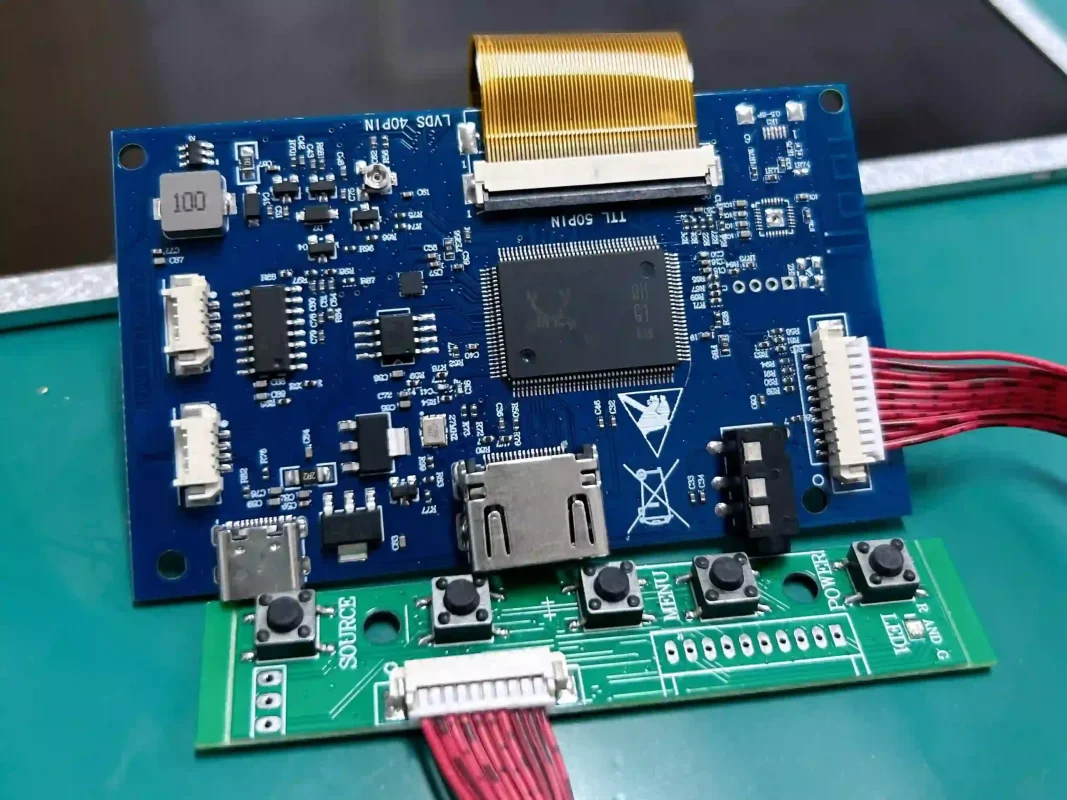
Adapter PCB and driver board development can be reviewed for your host platform, power design, connector and mounting requirements. Firmware scope and package contents are confirmed for the project.
Touchscreen & Cover Lens

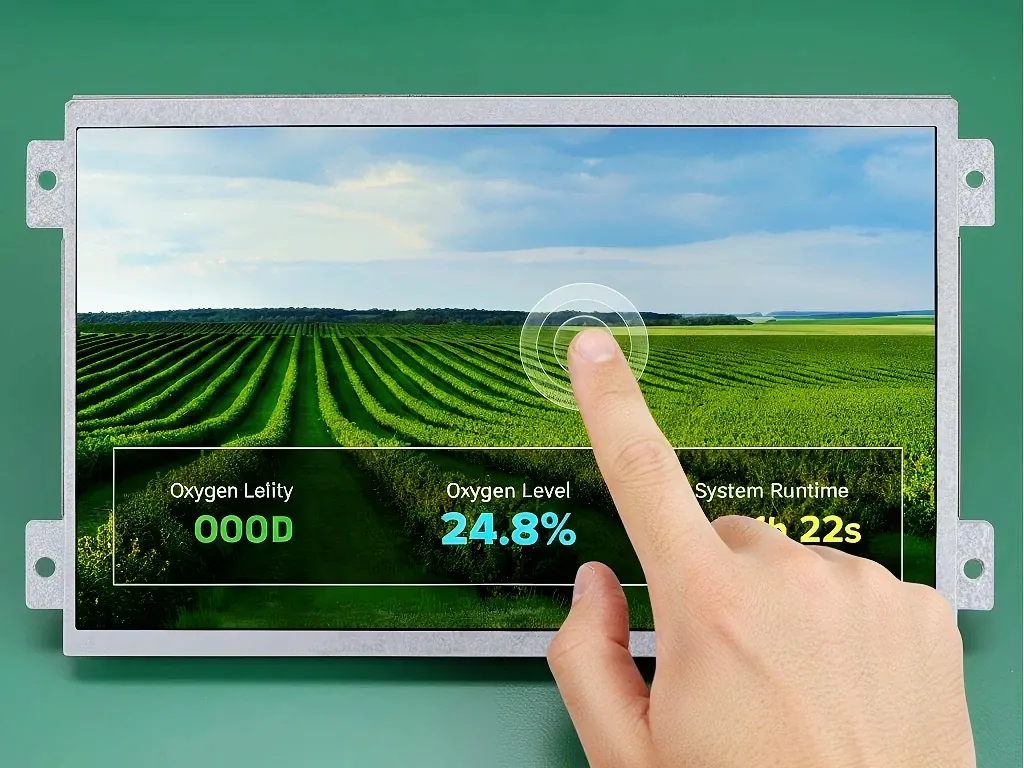
Resistive or capacitive touch, cover glass and PMMA lenses can be evaluated for the product housing. Sensor selection, lens thickness, printing and touch performance are confirmed during project review.